


Etiuni:
The Etiuni were an Early Iron Age indigenous tribal confederation or group of related highland polities in the northern and eastern Armenian Highlands, especially around the Lake Sevan basin, the Ararat plain, and other nearby regions of Armenia. They are known mainly through Urartian cuneiform inscriptions where they appear as one of Urartu’s most important northern rivals and as a land west of Lake Sevan.
According to one inscription:
- Ḫaldi marched ahead, I the king of Biainili (Urartu) conquered, burned, deported, and imposed tribute.
According to the Taşburun/Tsolakert inscription, King Menua of Urartu states:
- I captured Luḫiuni, the royal city of Erikua, and I put the land Etiuni under tribute.
This is one of the earlier Urartian claims over the Etiuni world and it sounds more like forced tribute after a campaign rather than full permanent control of an entire civilization.
Under King Argishti I, the language becomes much more aggressive, in one inscription he says:
- I conquered Etiuni, came to Išqigulu, Uduri, and Etiuḫi, and deported men and women.
Another passage says Ḫaldi defeated Etiuni and the land of Qihuni by Lake Sevan, after which Argishti reached Alištu, deported people, and founded Erebuni as a fortress to protect Biainili and intimidate enemy lands. The most interesting part is that the Urartians also admit Etiuni was not submissive.
In Argishti’s annals, he states:
- I heard that Etiuni intended to loot the aštiuzi of Ardini, so I mobilized again, marched into Etiuni, conquered the lands of Eriahi and Katarza, and carried men and women away to Biainili.
That means Etiuni was powerful enough to threaten Urartian sacred or political property, not just defend itself.
In addition, the Urartians mention several Etiuni rulers. The clearest named ruler is Diuṣini (sometimes rendered Diaṣuni) described in king Sarduri II’s annals as “the Iganian, king of the region of Etiu.” In the same passage, Rašu, king of the region of Ruišia, is also defeated and subjected to Sarduri. Other named leaders include Qapurini, king of the region of Igani; Nidini, king of Uelikuhi, who came before Sarduri, prostrated, was subjected, and placed under tribute; Murinu, king of Uelikuhi; and Ṣinalibi, king of Luehu and the territory of Tulihu. Sarduri II also mentions the “four kings” of Uiduri/Uduri-Etiuni, with preserved names including the kings of Arquqiu, Kamaniu, and Lueru. By the time of Urartian king Rusa I, the Urartians were still fighting around Lake Sevan.
The Tsovinar inscription, on the south shore of Lake Sevan, states that Rusa conquered lands around the lake, defeated 23 kings as enemies in one year, deported men and women to Biainili, imposed yearly tribute, installed a governor, and built fortresses there. Therefore the overall picture here is clear, Urartu claimed victory over Etiuni many times, but the repetition itself shows that Etiuni remained a stubborn, organized, and militarily serious highland confederation.
1 dhal-di-ni-ni uš-ma-⸢ši⸣-[ni] EN-si-ni-ni mru-sa-a-⸢še⸣
2 mdsar5-du-ri-hi-ni-⸢še a-li⸣ i-e-še i-ni-li e-ba-ni-li
3 šú-si-ni-e uš-ti-ip-ti-ni ⸢áš⸣-gu-ú-li LÚbu-ra-áš-tú-ú-li
4 KURa-da-hu-ni KURú-e-li-ku-hi KURlu-e-ru-hi-e
5 KURar-qu-qi-i-ni 4 LUGALMEŠ i-na-ni ap-ti-ni ṣu-i-ni-a-[ni]
6 KURgur-qu-me-li KURšá-na-ṭu-a-i-ni KURte-ri-ú-i-šá-i-ni
7 KURri-šú-a-i-ni KUR⸢še⸣-zu-a-i-ni KURa-ri-a-i-ni KURza-ma-a-ni
8 KURir-qi-ma-i-ni KURe-la-i-ni KURe-ri-⸢el⸣-tú-a-i-ni
9 KURa-i-da-ma-ni-ú-ni KURgu-ri-a-i-ni KURal-zi-ra-ni
10 KURtú-ru-a-i-ni KURši-la-a-i-ni KURú-i-du-a-i-ni
11 KURa-ṭè-za-a-i-ni KURe-ri-a-i-ni KURa-za-me-ru-ni-ni
12 [19] LUGALMEŠ i-šá-ni ap-ti-ni ṣu-i-ni-a-ni KURba-ba-ni-a
13 ⸢ku⸣-ru-ni-e PAP 23 LUGALMEŠ šú-si-ni MU ⸢KÚR⸣MEŠ áš-gu-bi
14 ʾa-še MUNUSlu-túMEŠ KURbi-a-i-na-di pa-ru-bi me-ši-ni šá-a-li
15 [nu?]-na-a-di ši-di-iš-tú-ú-li i-⸢ni-li⸣ É.GALMEŠ
16 [i]-⸢nu⸣-ki KURe-ba-a-ni ⸢LÚEN⸣.NAM e-di-[a te-ru]-⸢ú⸣-bi
17 [e]-ʾa i-ni É.GAL ba-du-si-[e ši-di]-iš-tú-bi [te-ru-bi ti]-ni
18 dIM-i URU KURbi-a-na-[ú-e uš]-ma-še KURKÚRMEŠ [na-pa-hi-a-i-di]
19 mru-sa-a-še a-li-e a-[lu-še] i-ni ⸢DUB⸣-te tú-li-⸢e⸣ [tú-ri-ni-ni]
20 dUTU-[še ma]-⸢a⸣-ni ti-ni ⸢ar⸣-[mu-zi ar]-mu-zi-gi [dUTU-ni pi-e-ni]
Translation:
“(1) [Through] the protection of the god Haldi, Rusa, son of Sarduri, says: I conquered these lands in a single military campaign, and I defeated them. (4) The land Adahuni, the land Uelikuhi, the land Lueruhe, the land Arquqini, four kings on this side of the lake. (6) I defeated the land Gurqumeli, the land Šanaṭuai, the land Teriušai, the land Rišuai, the land Šezuai, the land Ariai, the land Zama, the land Irqimai, the land Elai, the land Ereltuai, the land Aidamaniu, the land Guriai, the land Alzira, the land Turuaini, the land Šilaini, the land Uiduai, the land Atezai, the land Eriai, the land Azameruni, [19] kings on the other side of the lake, behind(?) the mountains. (13b) Altogether I conquered 23 kings as enemies in one year; I deported men and women to the Bia lands with yearly tribute. (15) I came (and) I built these fortresses in this region, I [install]ed a governor here, and I [bui]lt this fortress to perfection, (and) [I gave it the na]me ‘City of the Weather-God’, as [pr]otection of the Bia lands and [for the intimidation] of the enemy lands. (19) Rusa says: (as for the one) wh[o destroys] this [in]scription, may the Sun-God [annihilate h]im, (his) name and (his) off[springʹs off]spring [under the sun (or: the Sun-God].”
References:
Salvini, M. 2002. “The Historical Geography of the Sevan Region in the Urartian Period,” in The North-Eastern Frontier. Urartians and Non-Urartians in the Sevan Lake Basin. I. The Southern Shores, eds. R. Biscione, S. Hmayakyan & N. Parmegiani, Documenta Asiana 7, Rome, pp. 37–60 (56–57).
Salvini, M. 2008–2018. Corpus dei Testi Urartei, v. 1 pp. 496–497, v. 3 pp. 293–294, v. 5 pp. 283–284.
eCUT – Electronic Corpus of Urartian Texts (https://oracc.museum.upenn.edu/ecut/Q007086).
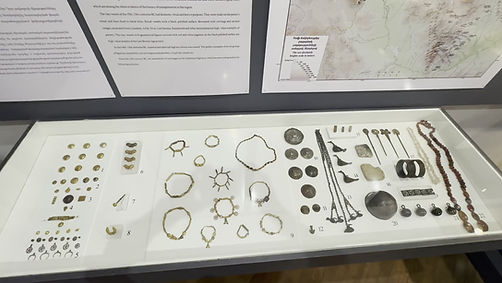
In origin, Etiuni grew out of the older Late Bronze Age and Early Iron Age Lchashen-Metsamor culture. Archaeological sites like Lchashen and Metsamor show the kind of fortified settlements, elite burials, metalworking, weapons, wagons, and religious centers that formed the cultural background of this region; Metsamor, for example, reached its height in the Late Bronze and Early Iron Age as an important metallurgical and religious center. Thus, Etiuni should not be imagined as a sudden random and foreign in-origin formation, but rather as a local highland formation that descended from the long Bronze Age cultural development of the Armenian Highlands. By the 9th–8th centuries BCE, it had become powerful enough to stand beside Urartu as one of the major political forces of the region, and it played a very important role in the cultural and ethnic environment that later contributed to the formation of the Armenian people.




What is the link between modern day Armenians and the Etiunians (simplified)?
- The majority of men from Etiuni belonged to Z2103, which is a subclade of haplogroup R1b. Approximately 35-38% of modern Armenian men belong to the R1b haplogroup (it is associated with the Yamnaya Culture).
- The majority of women from the Etiuni belonged to Haplogroups H, J, U, and N, which show continuity from earlier Kura-Araxes and Chalcolithic communities in the Armenian Highlands. Approximately 20% to 28% of the modern Armenian maternal gene pool belongs to haplogroup H and approximately 10% to 14% belongs to haplogroup U.