


Lchashen-Metsamor Culture:
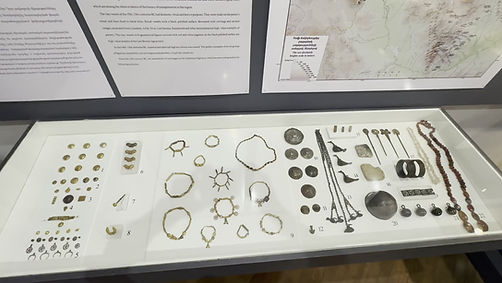
The Lchashen-Metsamor culture was a major Late Bronze Age and Early Iron Age indigenous culture of the Armenian Highlands and South Caucasus, flourishing roughly from 1500 to 700 BCE, especially across present-day Armenia, with related material also found in nearby regions such as southern Georgia and modern day eastern Turkey. They were predominantly Indo-European and grew out of earlier local South Caucasian Bronze Age traditions, especially the Trialeti-Vanadzor culture, which they themselves partially descended from the older Kura-Araxes world. In that sense, Lchashen-Metsamor was not a foreign culture, rather it was a powerful local culture that was rooted in the deep prehistoric traditions of the Armenian Highlands. It is known for its cyclopean fortresses, fortified settlements, advanced bronze working, decorated pottery, elite burials, bronze belts, weapons, wagons, and chariots, showing a society that had become wealthier, more organized, and more militarized. Sites such as Lchashen near Lake Sevan and Metsamor in the Ararat plain show that it was a culture which posessed strong metalworking skills, complex trade connections, and growing political complexity. By the Early Iron Age, this world is often connected with the rise of local highland polities such as Etiuni, before the expansion of Urartu reshaped the region. It is important to note that this culture after the Trialeti-Vanadzor culture is most directly associated with the formation of the Armenian ethnogenesis.




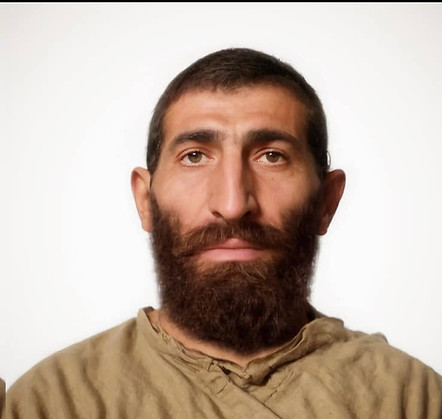


What is the link between modern day Armenians and the Lchashen-Metsamor culture (simplified)?
- The majority of men from the Lchashen-Metsamor culture belonged to Z2103, which is a subclade of haplogroup R1b. Approximately 35-38% of modern Armenian men belong to the R1b haplogroup (it is associated with the Yamnaya Culture).
- The majority of women from the Metsamor-Lchashen culture belonged to Haplogroups H (H2a, H13), K, U (U2, U3, U8), T (T2), and J (J1) which show continuity from earlier Kura-Araxes and Chalcolithic communities in the Armenian Highlands. Approximately 20% to 28% of the modern Armenian maternal gene pool belongs to haplogroup H and approximately 10% to 14% belongs to haplogroup U, meanwhile haplogroups T and K are less common.